History
Older History
Long before it was a lake, this area was already significant. Some historians connect it to ancient Lake Prasias, described by the Greek historian Herodotus as home to a Paeonian tribe who lived in wooden dwellings built on stilts over the water.
Centuries later, under Ottoman rule, records refer to the marshland here as "Podkova," meaning "horseshoe" in Bulgarian and Macedonian, a name that hints at the shape of the wetland before it was tamed. For most of its history, this was an untamed, swampy floodplain of the Strymon river: beautiful, but dangerous. Malaria was endemic, and the unpredictable floods made permanent settlement and farming difficult across the whole Serres plain.
More Recent History
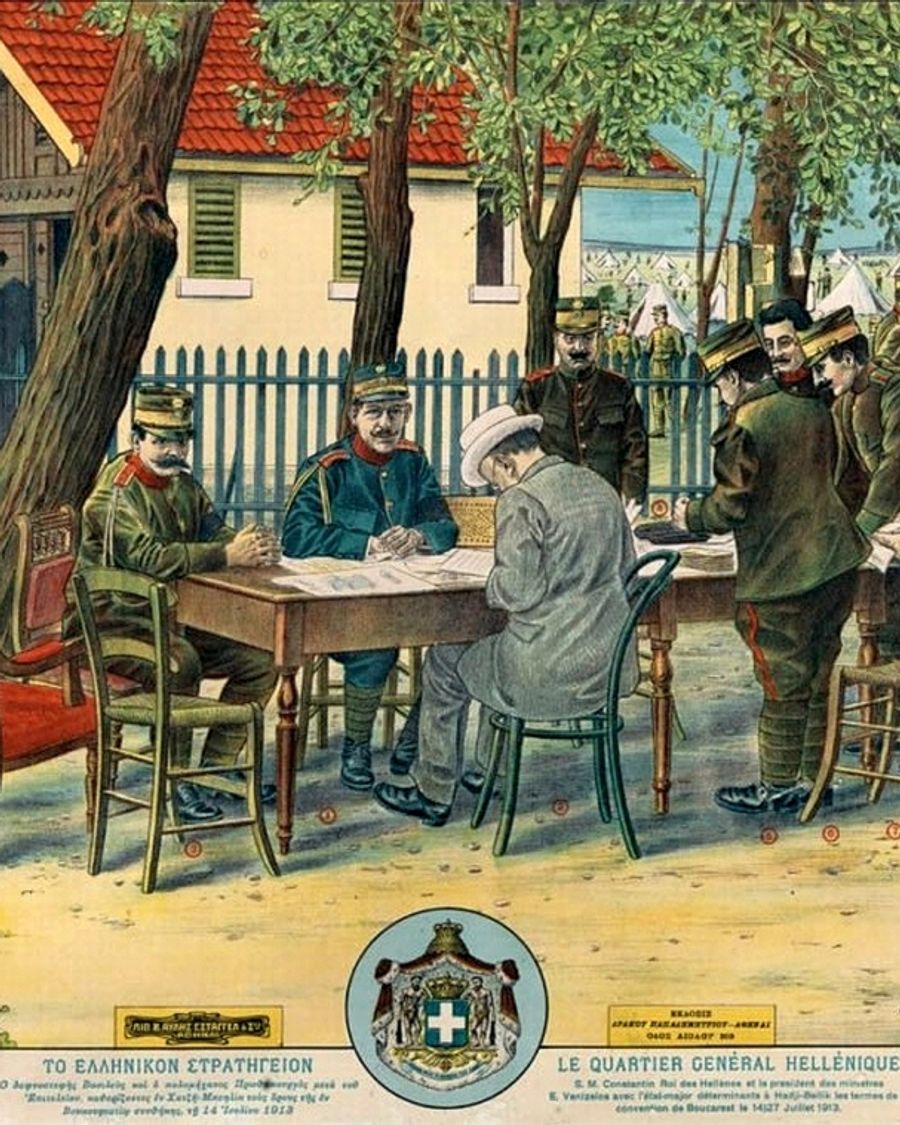
In 1913, at the end of the Second Balkan War, the old railway station at Vyronia became the headquarters of the Greek army. It was there that King Constantine I and Prime Minister Eleftherios Venizelos met with Bulgarian representatives to negotiate an armistice, under the same plane trees that still shade the station today.
Just over a decade later, the Greek state took on a much larger project: taming the Strymon itself. Between 1928 and 1936, embankments and a dam were built near the village of Lithotopos, with the dam becoming operational in 1932. The goal was flood control, sediment retention, and irrigation for the Serres plain, but the project also helped eliminate the malaria that had plagued the region for centuries, and helped resettle some of the 85,000 refugees who arrived in the area after the Asia Minor catastrophe of the early 1920s.
Even More Recent History
In 1975, Lake Kerkini was designated a Wetland of International Importance under the Ramsar Convention, one of only ten such sites in Greece. Then, in the early 1980s, a new and higher dam replaced the original one, enlarging the lake to roughly its current size and giving it the pear like shape it has today.
What began as a flood control and irrigation project has become one of the most important wetlands in Europe, and one of the best birdwatching destinations on the continent.
The Lake
Lake Kerkini as it exists today is entirely artificial, but it was built on top of a very old, very natural system. Before the 1930s, the Strymon river spread out here into a wide, shallow, ever-shifting marshland, fed by seasonal floods that could vary the water level by several meters a year.
The dam near Lithotopos didn't create wildlife habitat from nothing. It regulated a floodplain that was already rich with life, concentrating and stabilizing it into the lake, reed beds, and riverside forest you see today. That's part of why Kerkini feels so alive: underneath the engineering, it's still fundamentally the same wetland it always was.